

Descripción
Rapls Passkey lets users sign in to WordPress with passkeys (WebAuthn / FIDO2).
- Passwordless, phishing-resistant sign-in
- Same-device passkeys (Touch ID / Windows Hello)
- Cross-device sign-in using the browser’s native passkey flow when the browser offers it (scan with your phone). A custom QR approval flow is available in Pro.
- Shortcodes and Gutenberg blocks (login / passkey management) you can embed on any page
- Rename, suspend and resume individual passkeys — a device that is temporarily out of reach can be cut off without destroying the credential
- A site-wide passkey list for administrators (Users -> Passkeys), searchable by owner or name
- Works with two-factor plugins (Wordfence Login Security, Two-Factor, …): a passkey counts as the second factor, while weaker alternative logins must still pass the site’s 2FA
- Fully translatable UI (English source; translations come from translate.wordpress.org)
Shortcodes
Embed them in any page, post, or widget. In the block editor they are also available as the “Sign in with a passkey” and “Manage passkeys” blocks.
[rapls_passkey_login]— a passkey sign-in button for logged-out visitors. Supports theredirect(URL to go to after success) andlabel(button text) attributes.[rapls_passkey_register]— a management UI where logged-in users can register and remove their own passkeys.
Requirements
- PHP 8.2 or later
- WordPress 6.0 or later
- HTTPS (except on localhost)
Rapls Passkey Pro
Everything above is free, and stays free. Pro is a separate add-on for the part
that comes after the first passkey: moving a whole site across, and keeping a
way in when a device goes missing.
- Sign in from another device — approve a login on your computer from your phone, with a QR code and a four-digit confirmation code so a relayed code cannot be used elsewhere
- A way back in that is not a password — one-time recovery codes and email magic-link sign-in
- Roll out by role — require passkeys for the roles you choose, with a grace period, then turn password login off once everyone is across
- Adaptive step-up — ask for a passkey again after a password sign-in from somewhere unfamiliar
- Authenticator policy — FIDO Metadata Service checks, AAGUID allow and deny lists, trusted-device management
- Operations — security webhooks, adoption reports, multisite network settings, WP-CLI
One-time purchase, no subscription, with a year of updates and a 14-day refund.
Details and pricing
External services
This plugin sends nothing to any external service by default. One optional
integration, off unless you turn it on, contacts a third party:
Google reCAPTCHA v3 — used only when you enable reCAPTCHA for password
logins. When it is on, the visitor’s browser loads
https://www.google.com/recaptcha/api.js, and the plugin sends the resulting
token together with the request IP address to
https://www.google.com/recaptcha/api/siteverify so that Google can score the
request. Nothing is sent while the option is off. This service is provided by
Google and its use is governed by Google’s terms and privacy policy:
- Terms of Service: https://policies.google.com/terms
- Privacy Policy: https://policies.google.com/privacy
No other host is contacted. The plugin bundles the public suffix list it needs
(data/public_suffix_list.dat) rather than fetching it, and passkey ceremonies
happen between the browser and your own site.
Privacy
Authentication data is stored on your own site.
What is stored:
- Passkey credential records (public key, credential ID, sign counter, a label and timestamps) in a custom database table.
- A per-user WebAuthn user handle in user meta, plus one row in the options table recording that the account has one. The handle carries nothing about the person: for accounts created from this version it is derived from the account id and a site secret, and accounts that already had a random handle keep it.
- An optional audit log of passkey events (registration, sign-in, removal) with the acting user, IP address and timestamp.
Retention and removal:
- Passkey records remain until the user or an administrator deletes them; deleting a user removes their passkey records.
- The plugin integrates with WordPress’s built-in personal-data export and erase tools, so a user’s passkey and audit data are included in export/erase requests.
- Uninstalling the plugin (delete from the Plugins screen) drops its custom table and options.
This plugin does not use cookies for tracking. It sets only short-lived, functional cookies during a login ceremony (for example the pending second-factor login), which expire within minutes.
Capturas de pantalla
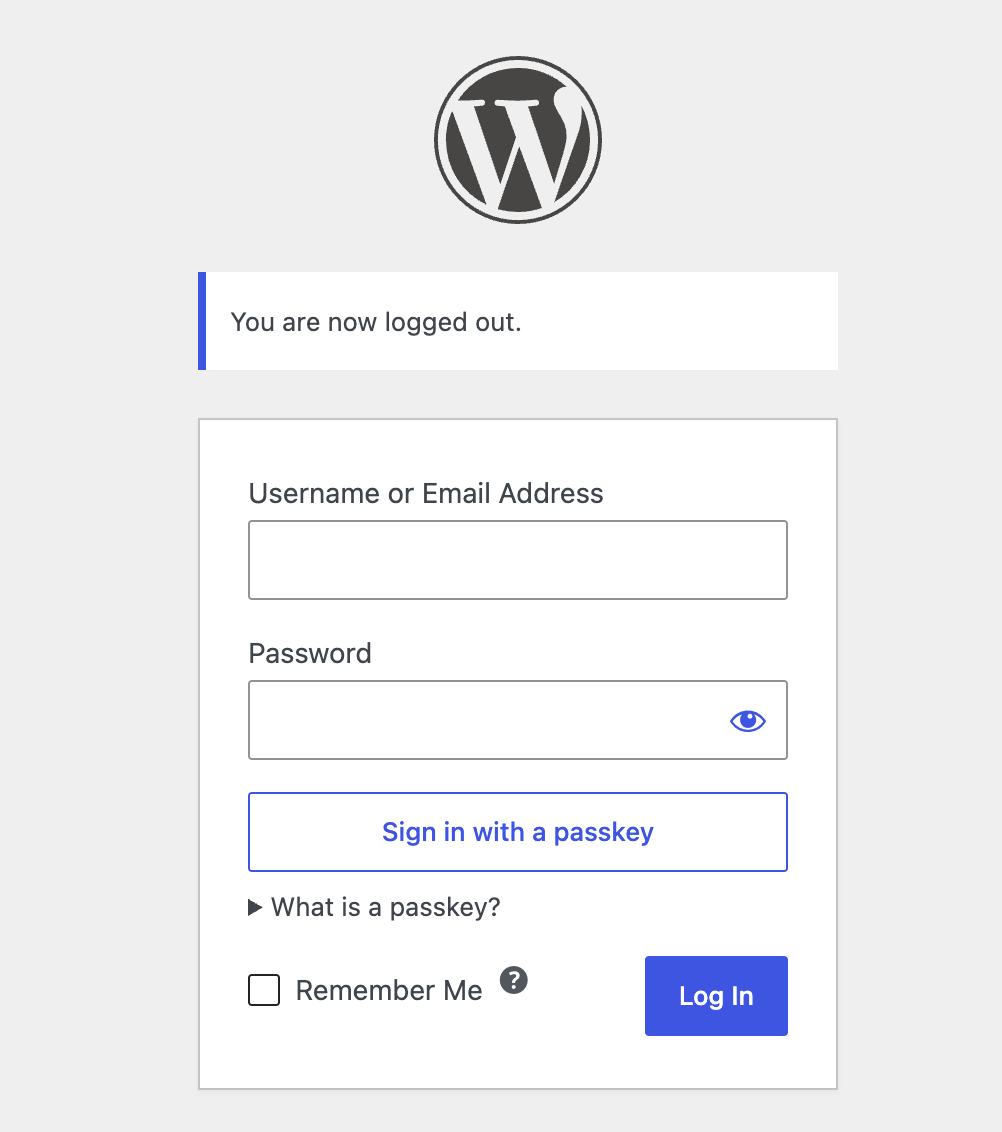
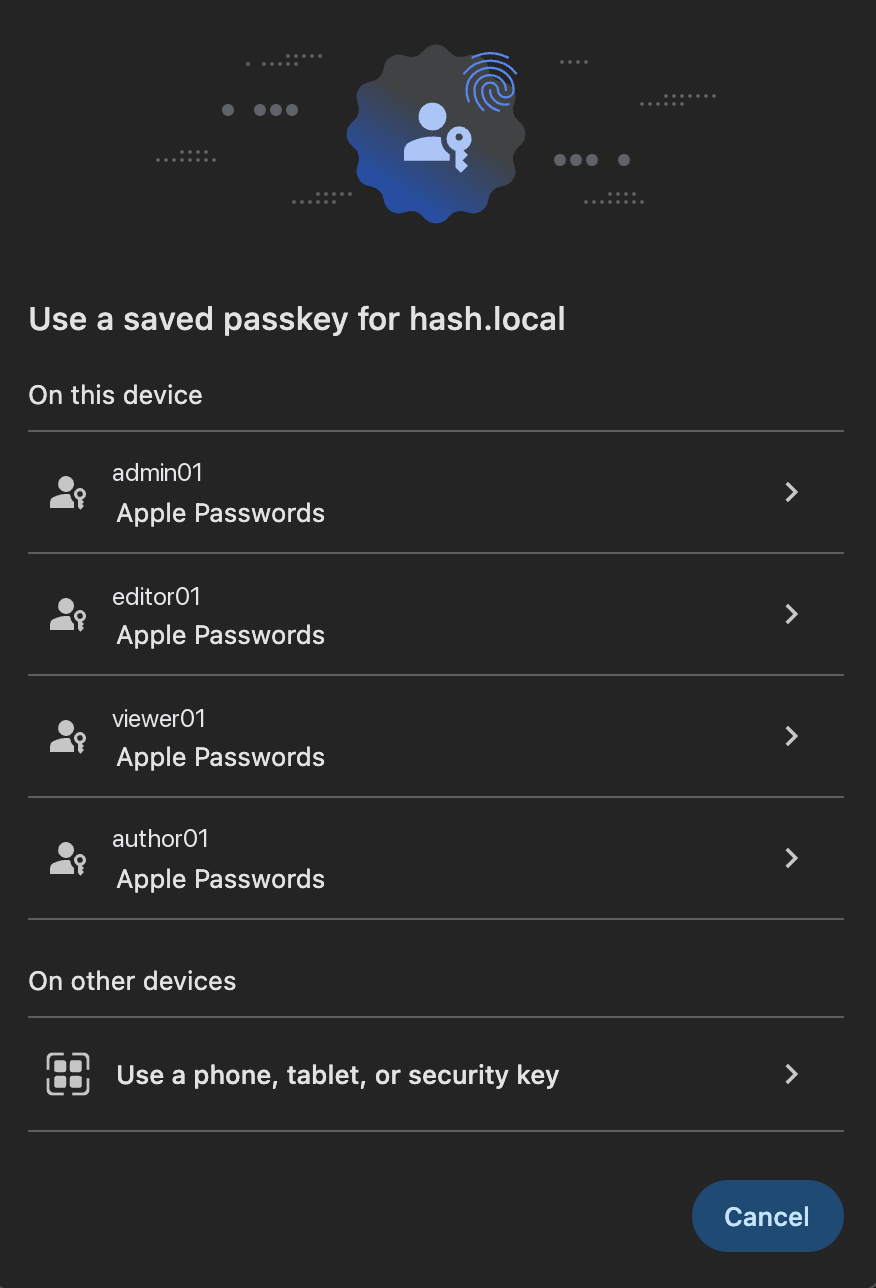
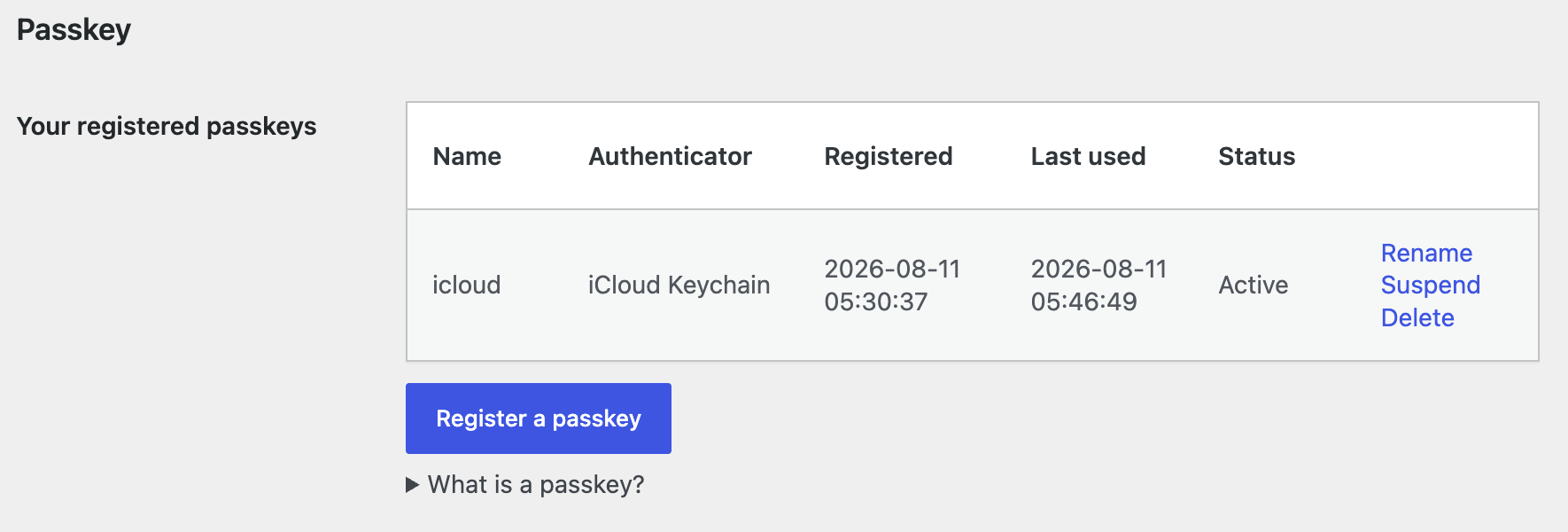
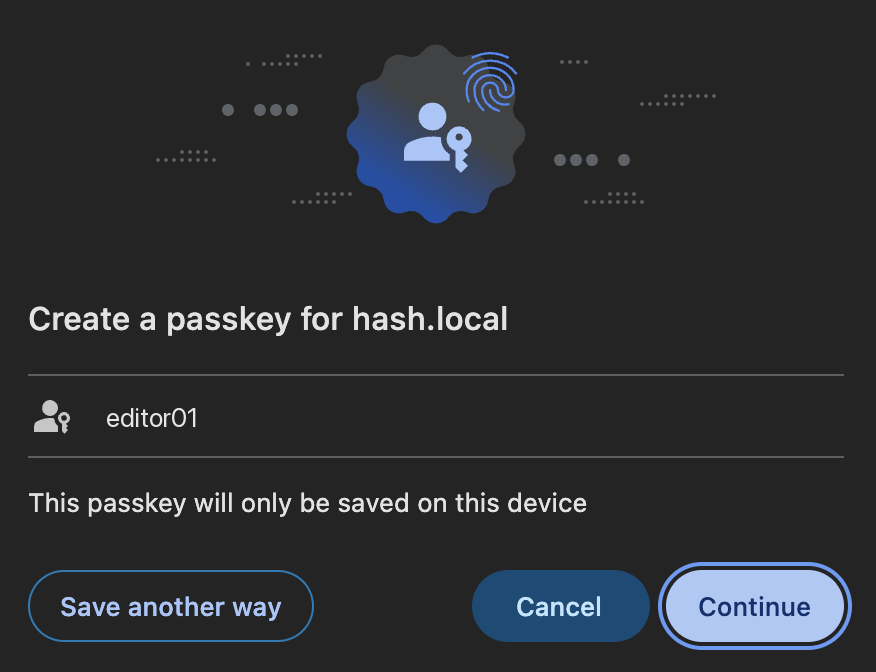
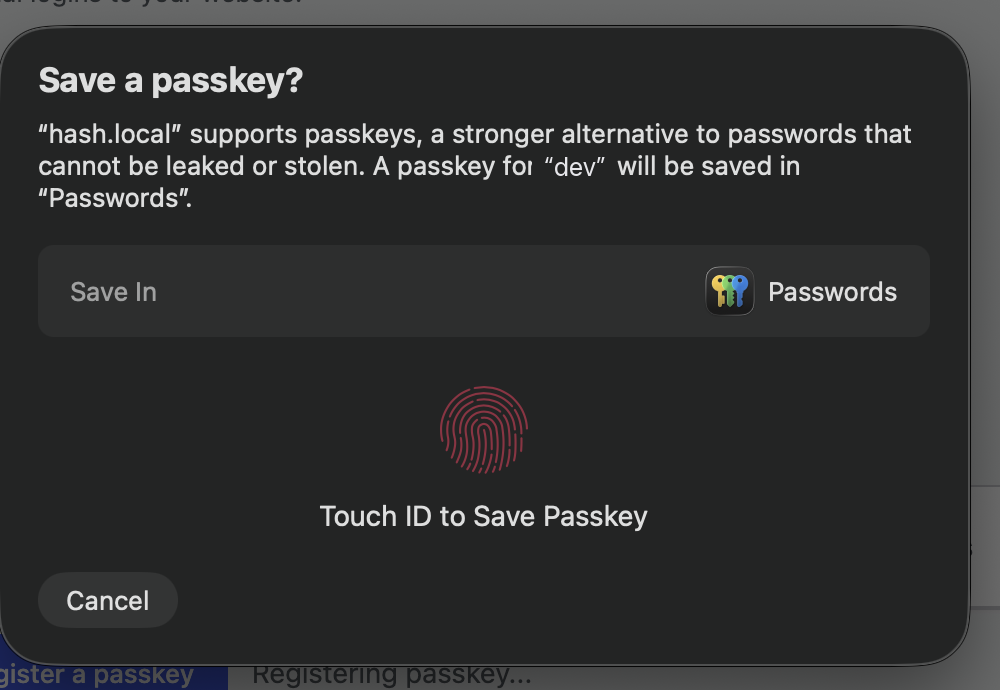
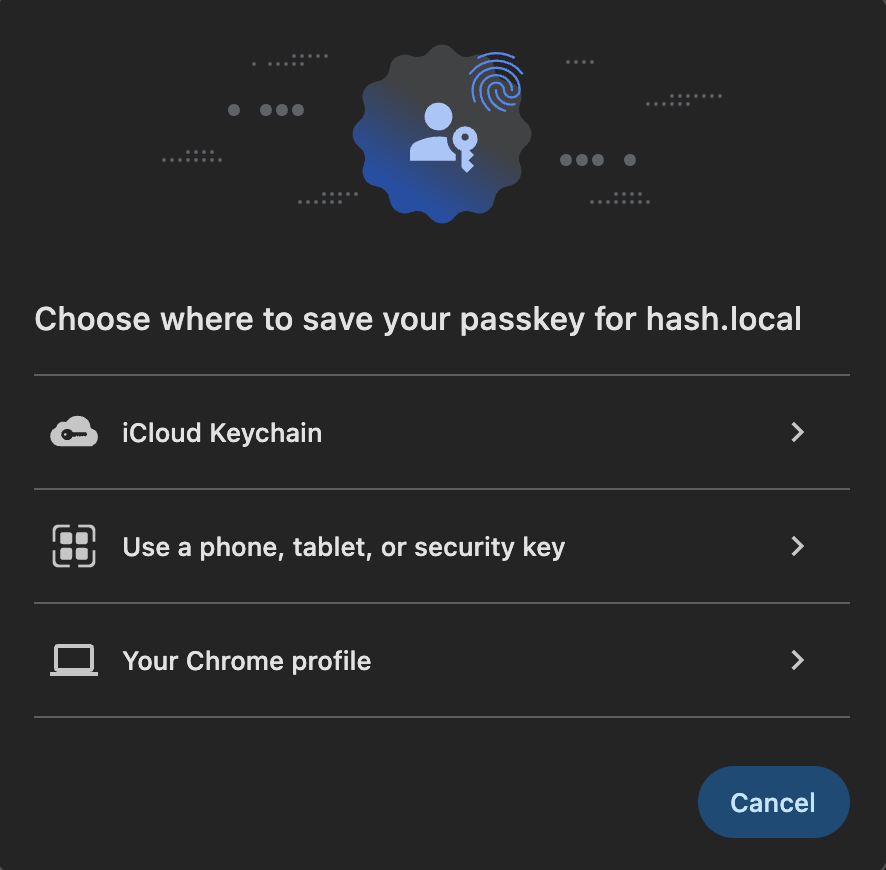
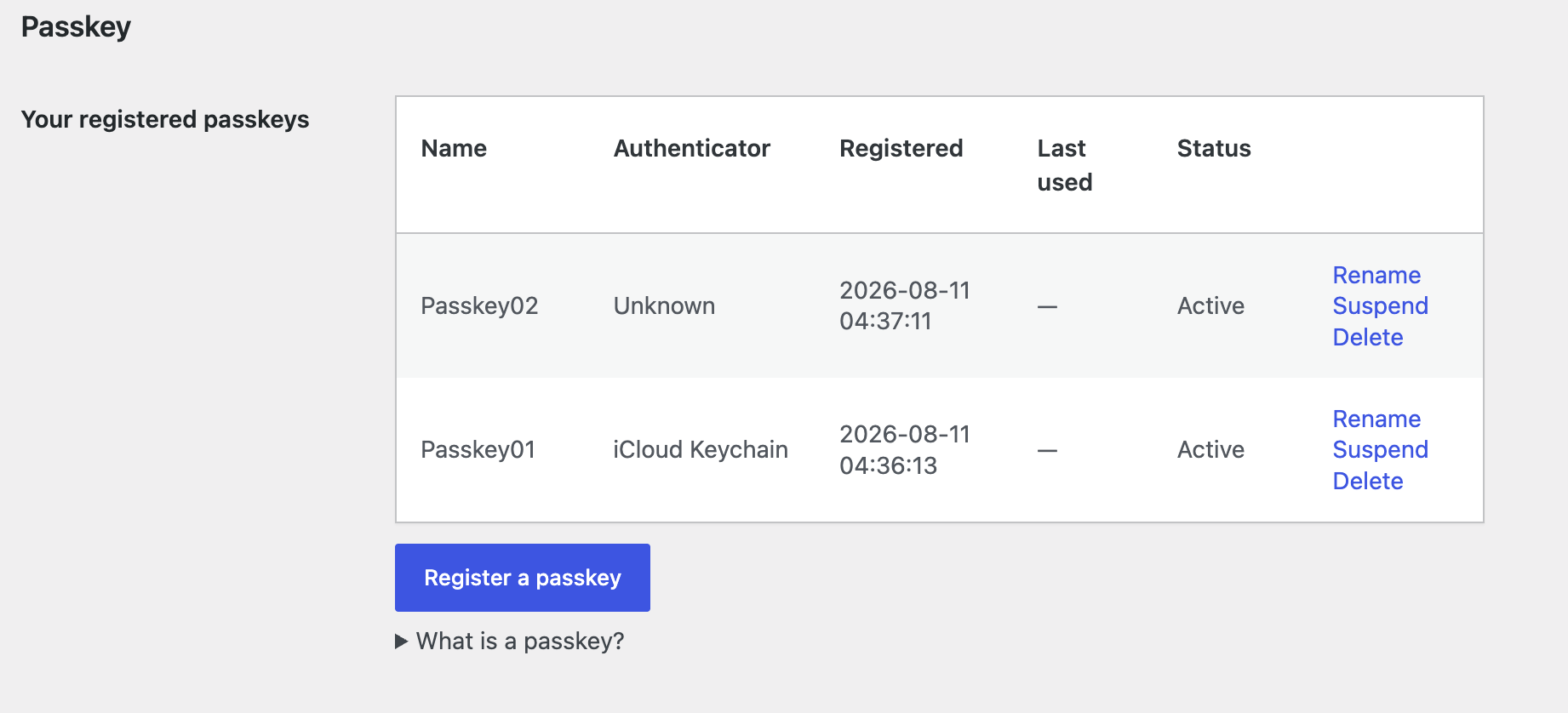
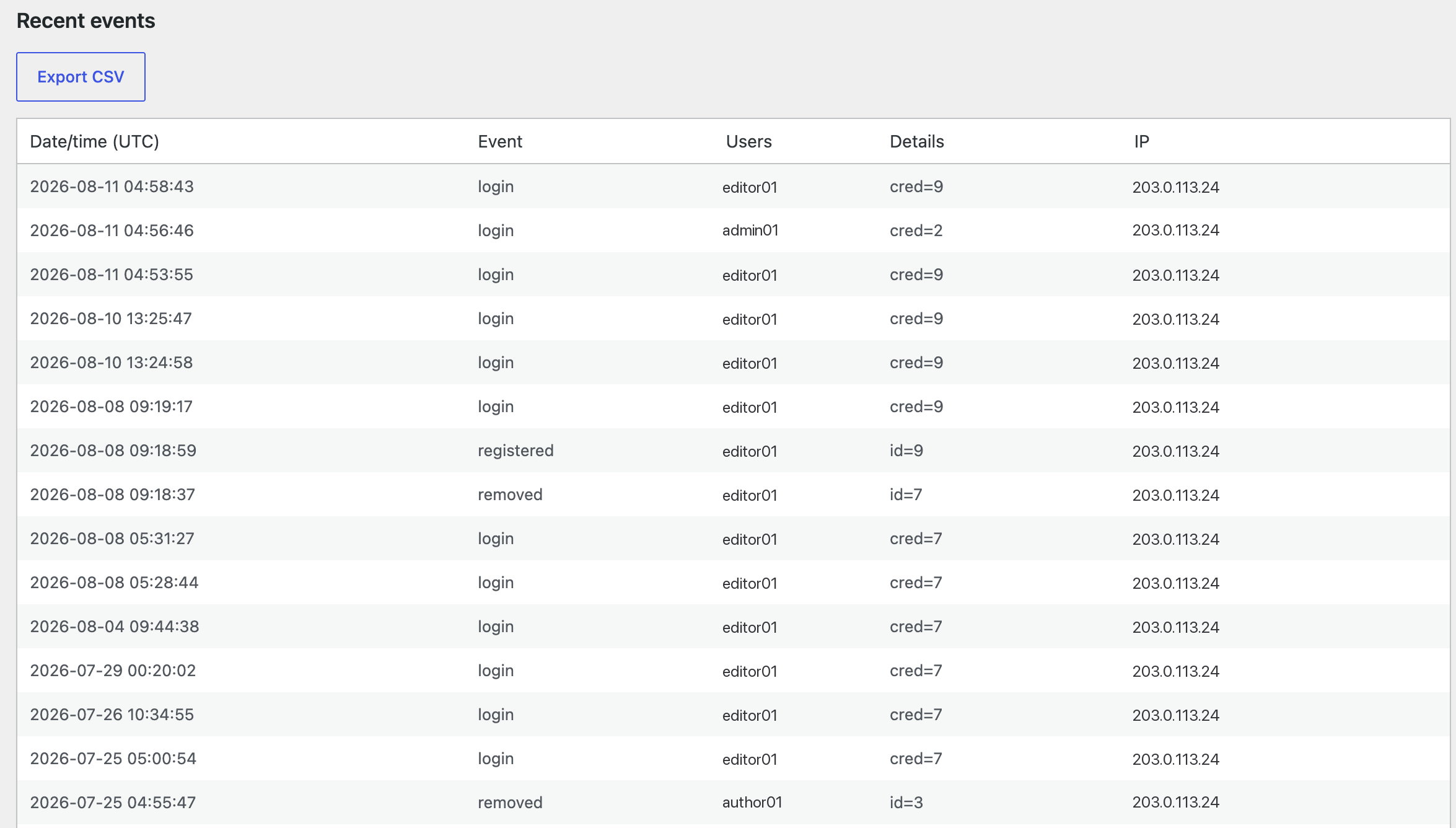
Bloques
Este plugin proporciona 2 bloques.
- Sign in with a passkey
- Manage passkeys
Instalación
- Place the plugin in
wp-content/plugins/rapls-passkey. - Activate “Rapls Passkey” from the Plugins screen.
- Register a passkey from your profile screen.
FAQ
-
Is the free version limited?
-
No. Passkey sign-in, registration, management, the shortcodes and blocks, the
administrator’s passkey list and the two-factor integrations are all in the free
plugin, without a cap, a trial period or a licence key. Rapls Passkey Pro is a
separate add-on that adds different features — cross-device QR login, recovery
codes, enforcement by role — and installing it is not required for anything
described above to work. -
What if I lose my passkey and cannot sign in?
-
Password login still works alongside passkeys, so sign in with your password as usual and then remove or re-register passkeys from your profile screen.
You can also manage passkeys from the server with WP-CLI:
wp rapls-passkey list --user=admin
wp rapls-passkey remove <id>
In an emergency, add the following to wp-config.php to temporarily disable passkey enforcement (remove it once you have recovered):
define( 'RAPLS_PASSKEY_BYPASS', true );
Reseñas
No hay reseñas para este plugin.
Colaboradores & Desarrolladores
“Rapls Passkey” es software de código abierto. Las siguientes personas han contribuido a este plugin.
Colaboradores
“Rapls Passkey” ha sido traducido en 1 idioma. Gracias a los traductores por sus contribuciones.
Traduce “Rapls Passkey” a tu idioma.
¿Interesado en el desarrollo?
Revisa el código, echa un vistazo al repositorio SVN, o suscríbete al registro de desarrollo por RSS .
Historial de cambios
0.13.70
- Fixed: on PHP older than 8.2 the whole site went down, front end included. The bundled dependencies require 8.2, and Composer’s platform check throws the moment the autoloader is read — inside WordPress’s plugin loading, where nothing catches it. The plugin now checks the version first and steps aside with an admin notice, leaving the rest of the site alone. The
Requires PHPheader does not cover this on its own: WordPress reads it when activating and when offering an update, so a server whose PHP is lowered afterwards, or a WP-CLI running an older PHP than the web server, went straight past it.
0.13.69
- The Rapls Passkey Pro panel moved into a sidebar that follows the page down. It sat at the very bottom of a single column, below the audit table, where nobody scrolls. It also says what the add-on is for rather than listing features, the Plugins screen gains “Settings” and “Go Pro” row links, and the adoption figure names what closes the gap. Nothing on the page is gated: the readme now has a Pro section and an FAQ entry saying plainly that the free version has no cap, trial or licence key.
- Asks for a WordPress.org review, once. After a week of use, and only if a passkey has actually been registered, a notice on this plugin’s own two screens asks for one. Every button — including the close button — settles it for good, and rapls_passkey/show_review_prompt turns it off entirely. It never appears anywhere else in wp-admin and never comes back.
- Corrected: the readme claimed a bundled Japanese translation, which has not been true since 0.13.62. Translations come from translate.wordpress.org.
0.13.68
- Screenshots for the plugin directory listing, and the readme section that names them. No change to the plugin.
0.13.67
- Tests only, and one that was worth finding: nothing asserted that registering a passkey for another user is on by default. The stub in the enrolment test answered the filter itself, so the shipped default was never read — flip it back to off and every test still passed. The default is now under test, on both call sites, and the source is checked for wording that ties the feature to the paid add-on.
0.13.66
- Registering a passkey for another user is on by default. It was implemented but switched off, and the Pro add-on turned it on — which made a built-in feature depend on a licence, and that is not allowed here. The capability check was always the real bound and it has not changed: only someone who can already edit that user, and could therefore reset their password and sign in as them, can enrol for them. Pro’s setting now only turns the feature off.
- The second-factor screen filters the markup its 2FA provider prints, to the form controls such a screen needs. The two bundled adapters are unaffected, byte for byte; inline JavaScript from a provider is dropped, and a provider that needs it should enqueue it.
- The package no longer carries the Japanese catalogue or
load_plugin_textdomain(). WordPress.org builds translations for every locale from translate.wordpress.org and loads them on demand, and a bundled copy would only shadow that. - Dropped two test-only directories that Composer installs inside third-party packages (
doctrine/deprecations,symfony/clock).
0.13.65
- Clears the last of the WordPress Plugin Check warnings against the shipped package.
$_SERVER['REQUEST_METHOD'], aredirect_tofrom the query string and the “seen device” cookie are now unslashed and sanitised on the way in rather than only validated afterwards; the uninstall script’s two loop variables are prefixed, since a file that runs at global scope defines globals; and the exemption on the DROP TABLE in uninstall named the wrong rule. composer.jsonships with the package again. WordPress.org’s scan asks for it wherever avendor/directory is present, and it is the manifest that says what is in there.composer.lockstays out. Note for anyone reading the package:vendor/has already been namespace-prefixed by the build, so do not runcomposer installinside an installed copy.- No functional change.
0.13.64
- Readme only:
Tested up tonamed a patch release (7.0.2). WordPress.org’s automated scan requires the major version alone, and rejected the upload over it. It reads 7.0 now; the plugin is unchanged and was tested against 7.0.2.
0.13.63
- Direct-access protection was missing from every file in the distributed package. The plugin guards each file with
if ( ! defined( 'ABSPATH' ) ), which the build rewrites toif ( ! \defined( 'ABSPATH' ) )— a form the WordPress Plugin Check tool does not recognise. Every shipped file therefore read as unprotected to the tooling, while the repository looked correct. The guard is now written in the form that survives the build. - The code-standard exemptions in the shipped files were pointing at the wrong lines. They were written at the end of the line they applied to, and the build moves a trailing comment onto the following line — so each one silenced the line after the one it was meant to cover. All of them are now written above the line they apply to.
- Fixes the findings these two hid: an unescaped exception message, a missing translators comment, a database call whose exemption named the wrong rule, and the CSV export’s file handle. Behaviour is unchanged; the audit-log CSV, the two-factor integrations and the passkey cap all work exactly as before.
- Also:
Plugin URIpointed at this plugin’s WordPress.org page, which the plugin header documentation does not allow, andAuthor URIwas missing. The readme’s external-service disclosure (optional reCAPTCHA) is now its own section, and releases older than 0.13.46 have moved to changelog.txt.
0.13.62
- No change to the plugin. Release-tooling only: the rebuild check reported “identical” beside two different archive checksums, when what matches is every file inside them.
0.13.61
- No change to the plugin. Release-tooling only: the rebuild check exempted two whole files from comparison instead of two fields inside them.
0.13.60
- No change to the plugin. Release-tooling only: the rebuild check now runs in CI on every release and compares the two packages as file trees.
0.13.59
- No change to the plugin. Release-tooling only: the claim made by the verification bundle is now narrower, accurate, and checked by a script.
0.13.58
- No change to the plugin. Release-tooling only: the source shipped for review can now rebuild itself.
0.13.56
- No change to the plugin. Release-tooling only: the bundle no longer writes a record into the directory that record describes.
0.13.55
- No change to the plugin. Release-tooling only: the bundled dependency tree is verified on every build, not only when a record was already present.
0.13.54
- No change to the plugin. Release-tooling only: the bundled dependency tree is verified file by file against a recorded manifest before packaging.
0.13.53
- Audit CSV export: a formula hidden behind leading whitespace is now neutralised too. The check looked at the first byte, so a username beginning with a space, a tab, a non-breaking space or a byte-order mark before
=,+,-or@was written to the file unguarded — and a spreadsheet skips that whitespace before deciding whether a cell is a formula. - The readme now links Google’s terms and privacy policy for the optional reCAPTCHA integration, and names the endpoints it contacts.
0.13.52
- No change to the plugin. Release-tooling only: CI now requires every job in a run to have succeeded before a release is assembled.
0.13.50
- No change to the plugin. Release-tooling only: CI attests to the outcome of every job and the release tooling verifies it.
0.13.49
- No change to the plugin. Release-tooling and documentation corrections only.
0.13.48
- No change to the plugin. Release-tooling only: the end-to-end test procedure and the recorded CI provenance were corrected.
0.13.47
- No change to the plugin. Release-tooling only: the bundled test procedure and the real-database test harness were corrected.
0.13.46
- Packaging fix: the previous package contained development files that should never have shipped — the test suite, build scripts, CI configuration and Composer manifests. They were harmless to run but had no business being in a plugin ZIP. This release contains runtime files only, and the build now checks the finished package for them.
For the change history of 0.13.45 and earlier releases, see changelog.txt.